
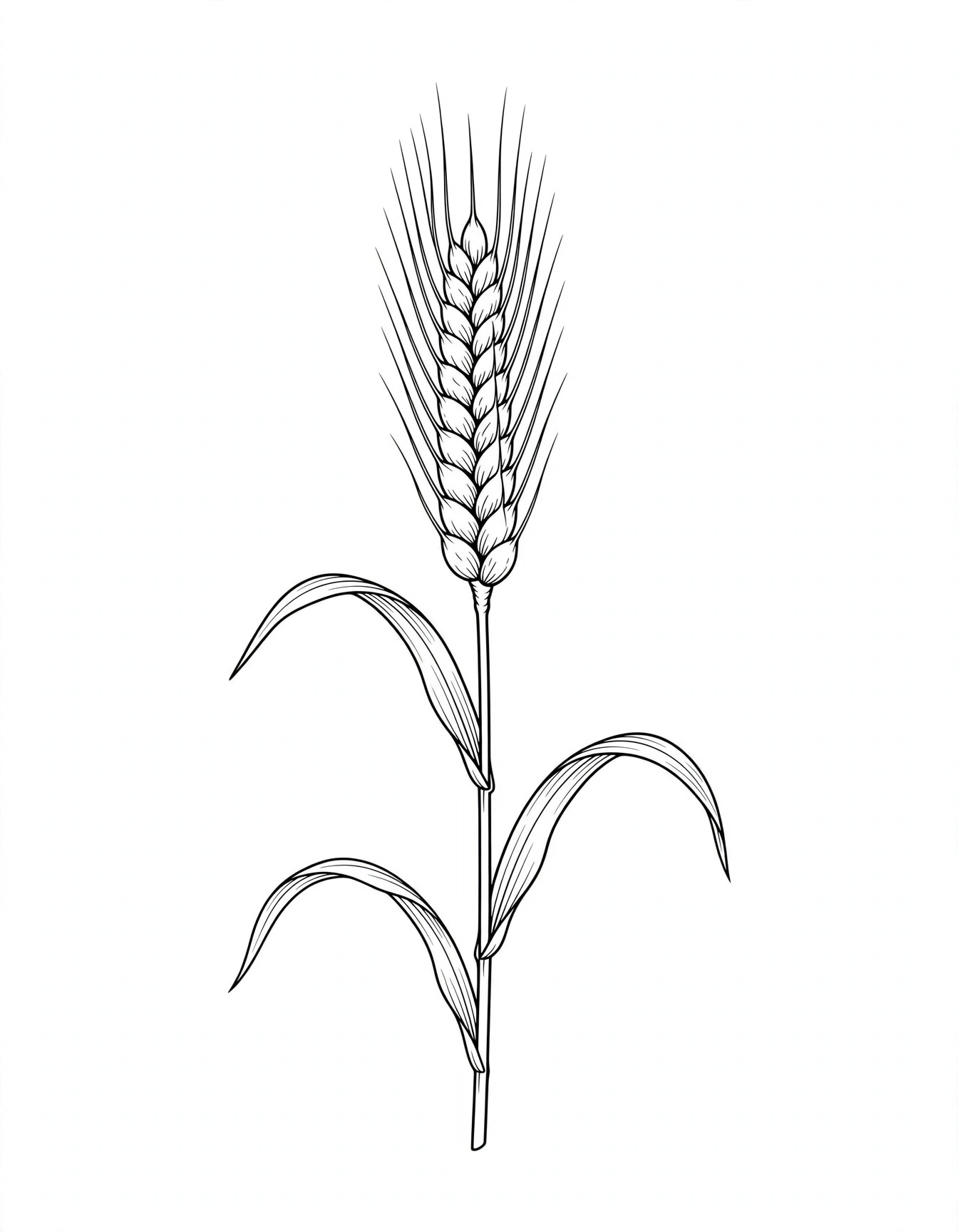
When I first started milling flour at home, I thought all wheat was basically the same — you grind it, you bake with it, done. Then I tried making muffins with the same hard white wheat I use for my sandwich bread, and they came out… fine. But a little sturdy. A little more “bread-like” than a muffin wants to be.
From then on, soft white wheat had a place in my kitchen, and a whole new corner of my baking opened up.
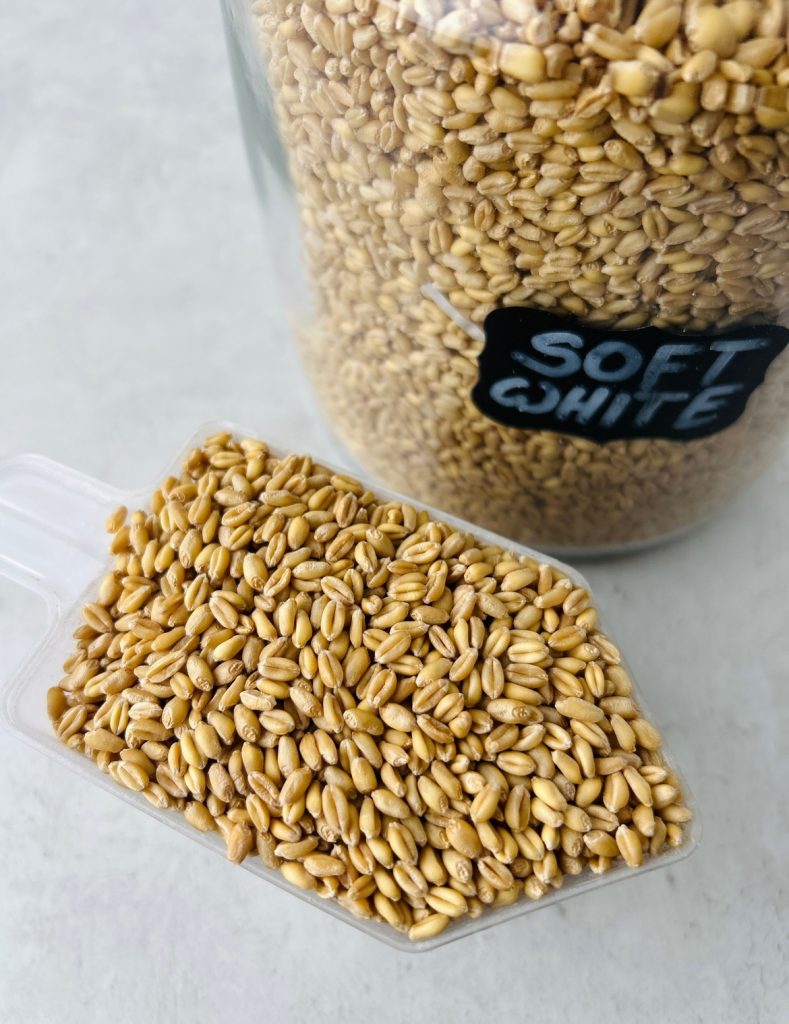
Soft white wheat is the tender one of the wheat family — the grain I reach for when I want something soft, light, and delicate instead of chewy and strong. If hard white wheat is my everyday bread grain, soft white is my pastry grain. Let me introduce you to it properly.
What is soft white wheat?
Soft white wheat is one of the six classes of wheat grown in the United States, and just like hard white wheat, its name tells you almost everything:
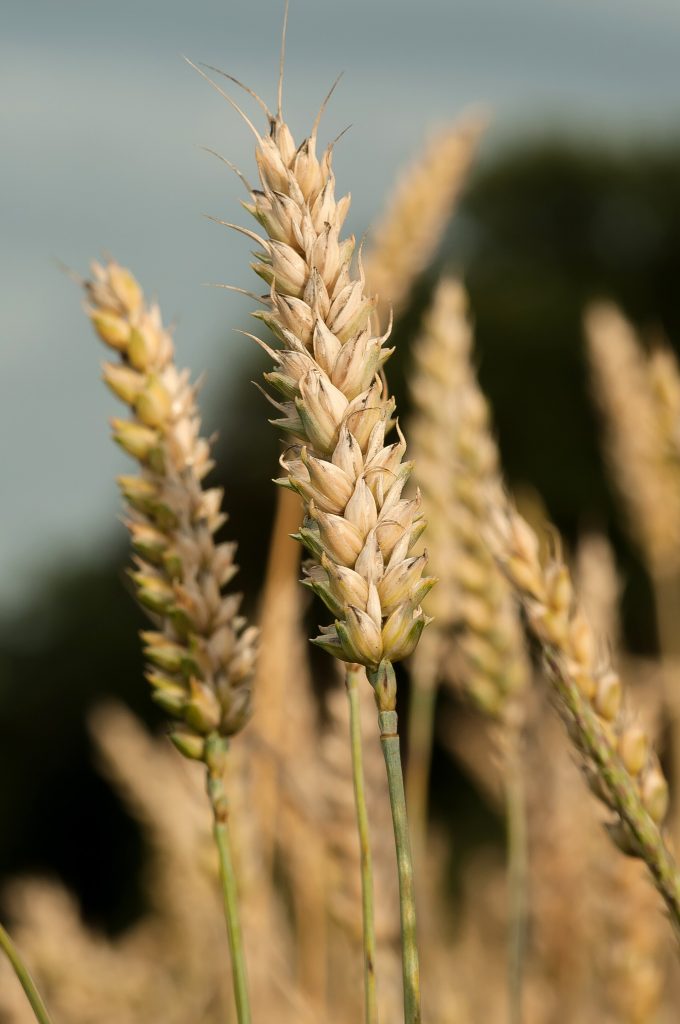
Photo: Optograph, CC BY-SA 3.0, via Wikimedia Commons.
- “Soft” describes the kernel and its protein. Soft wheats are lower in protein — soft white typically runs about 8.5–10.5% protein — and lower protein means weaker, gentler gluten. Instead of building a strong, stretchy net the way bread flour does, soft white flour makes a tender, delicate crumb.
- “White” describes the color of the bran, the outer coat of the berry. Like hard white wheat, its bran is pale and sandy-gold rather than reddish-brown, so the flavor stays mild and a little sweet, and bakes stay light in color.
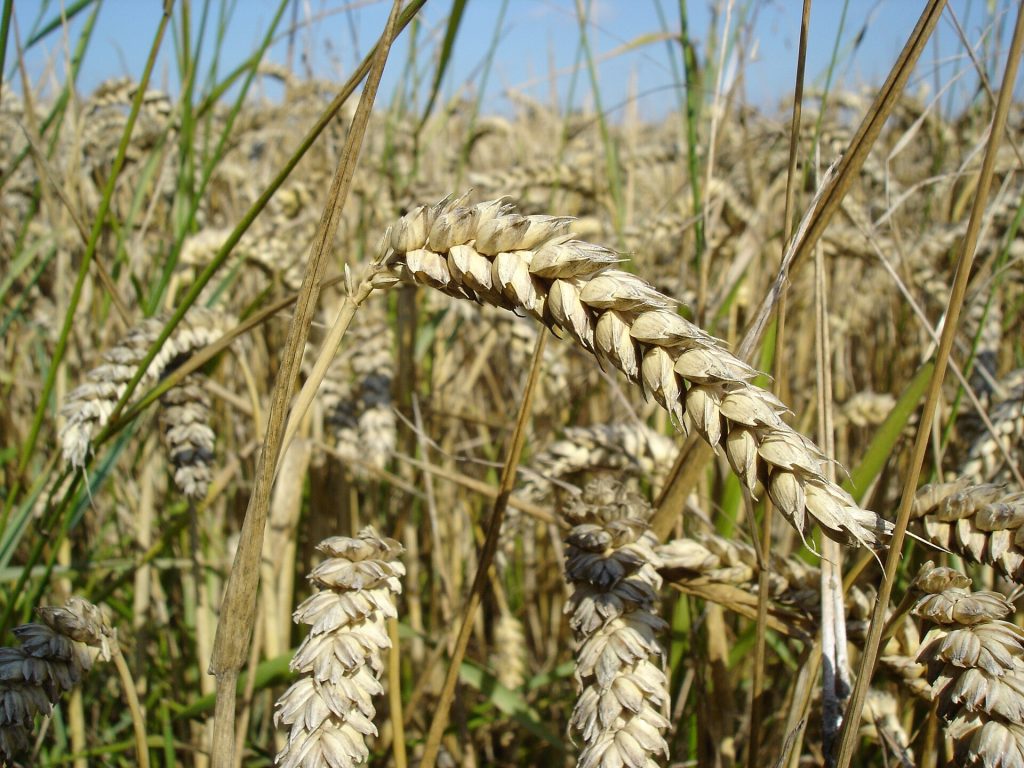
Photo: Bluemoose, CC BY-SA 3.0, via Wikimedia Commons.
That low protein is not a flaw — it’s the whole point. A cake doesn’t want to be chewy. A biscuit doesn’t want to fight back. Soft white wheat is built for the bakes that are supposed to melt a little.
It comes in winter types (planted in the fall and harvested in early summer) and spring types (planted in spring and harvested in late summer), and there’s also a very soft subclass called club wheat, often blended with soft white for the most delicate cakes and pastries.
Where does soft white wheat grow?
Soft white wheat loves a milder, wetter climate than its hard-wheat cousins. Virtually all of it is grown in the Pacific Northwest — Washington, Oregon, and Idaho — where Washington is the leading producer. Soft wheat in general prefers that cooler, rainier country, which is the opposite of the dry, sunny Plains where the hard wheats thrive.
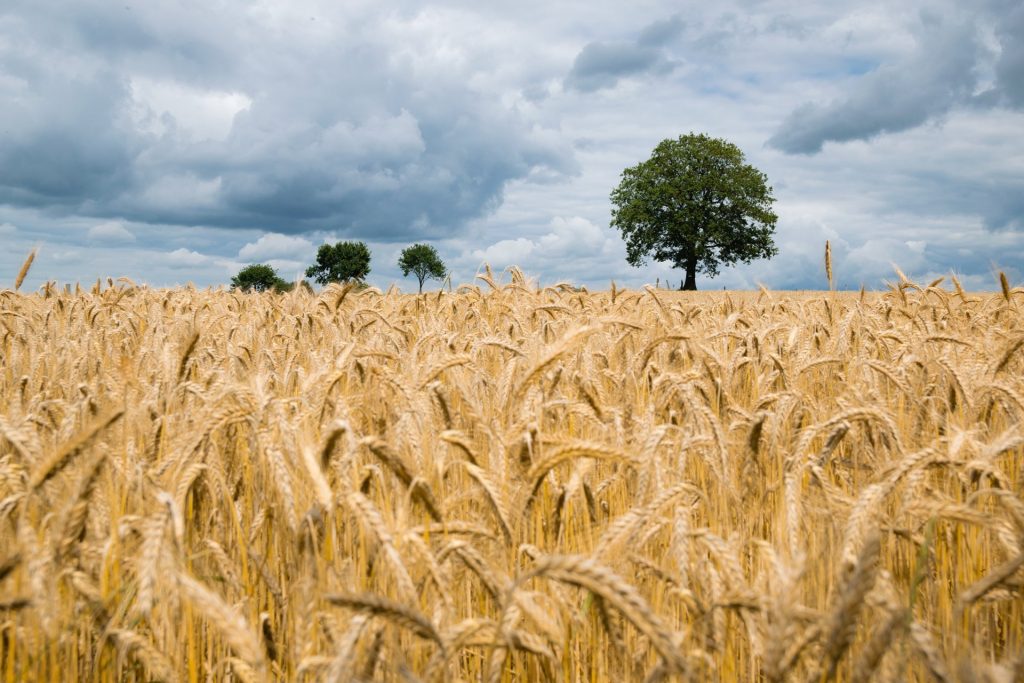
Photo: KaiPilger / Pixabay.
It’s a loved grain far beyond the Northwest, too — a large share of the crop is exported, and bakers around the world prize its flour for sponge cakes and delicate pastries. But for those of us milling at home here in the US, “Pacific Northwest” is the home address to remember.
The nutrition: tender, but still the whole berry
Here’s the part people forget: “soft” and “pastry” do not mean “refined.” When you mill soft white wheat berries at home, the whole berry — bran, germ, and endosperm — goes into your flour, exactly like with hard wheat. Nothing is removed.
Per 100 grams of whole soft white wheat berries (about ½ cup plus a spoonful), USDA figures give roughly:
- 340 calories
- About 11 g protein in the whole berry
- About 12.7 g fiber — roughly half of what most of us need in a day
- About 2 g fat (the good natural oils that live in the germ)
- Iron, phosphorus, zinc, copper, and manganese
- B vitamins, especially thiamin, concentrated in the bran and germ
Compare that with a bag of store-bought pastry or cake flour, which is refined white flour: the bran and germ were removed, and with them went most of the fiber and much of the nutrition.

What is soft white wheat best for?
- Cakes — soft, fine, tender crumb
- Cookies — tender instead of tough or bready
- Muffins — light and soft, not sturdy like bread
- Pancakes — delicate, with crisp edges
- Pie crust — flaky and tender, easy to roll
- Biscuits and pastries — the classic use for this grain
- Crackers — another traditional soft white use
Around the world it’s also prized for Asian-style noodles and flat breads, and commercial bakers blend it with stronger wheats to “mellow” them. At home, I use that same idea in the other direction:
My favorite blending trick: soft white doesn’t have to work alone. Blend it with hard white wheat when you want something in between — for example, mostly hard white with some soft white mixed in for a softer sandwich loaf, or half and half for muffins with a little more structure. Having both berries in the pantry covers nearly everything I bake: hard white for breads and everyday baking, soft white for pastries, cookies, cakes, and muffins.
Soft white vs. hard white wheat: what’s the real difference?
These two get confused constantly, because both have that pale, mild “white” bran.
- Hard white wheat — higher protein (about 11–14%), strong gluten. Bread, bagels, pizza dough, rolls. Chewy, structured, rises tall.
- Soft white wheat — lower protein (about 8.5–10.5%), weak, gentle gluten. Cakes, cookies, muffins, biscuits, pie crust. Tender, delicate, melts.
Same mild, slightly sweet flavor family. If a bake is supposed to hold its shape and chew a little, reach for hard. If it’s supposed to be soft and tender, reach for soft.
Can you bake bread with soft white wheat alone? The gluten is too gentle to trap much air, so a yeast loaf tends to bake up low and dense. Blend it with hard white or hard red instead and let the strong grain do the lifting.
A few tips for baking with it
Mix gently. With tender bakes, overmixing is the enemy — it develops what little gluten there is and toughens the crumb. Stir just until the flour disappears.
Expect a thirsty flour — but a gentler one. Freshly milled flour absorbs liquid differently than store flour, and soft white is no exception. If a batter looks dry, give it a few minutes to drink before you add more liquid.
Mill it fine. For cakes and pastries, I mill soft white on a fine setting, so the crumb stays delicate.
Use it fresh. Same rule as every grain in this series: mill what you need, when you need it. The berry stores beautifully whole; the flour is at its best the day it’s ground.
Baking with freshly milled flour?
If matching the right grain to the right bake has you curious to try milling your own, my Freshly Milled Flour Basics mini-course is the basics, all in one place — made for people who are just starting out. It covers which wheat berries to buy (including the hard white + soft white pairing that covers almost everything), how milling and hydration actually work, and your first waffles, step by step.
👉 Learn more about the mini-course here: https://eva-riazati-food-photography.myshopify.com/products/freshly-milled-flour-basics-mini-course
Freshly Milled Flour Basics — Mini-Course
No pressure at all — start with one recipe on the blog and see how it tastes in your kitchen. That’s how I started, too.
Frequently asked questions
Is soft white wheat whole grain?
Yes — completely, when you mill the whole berry. “White” is just the bran’s color, and “soft” is about protein, not refining. It is very different from white pastry flour, which has had the bran and germ removed.
Is soft white wheat gluten-free?
No. It’s wheat, just with weaker, gentler gluten — which is exactly why it makes tender cakes instead of chewy bread. It is not suitable for anyone with celiac disease or a wheat allergy.
Can I swap soft white wheat for hard white wheat in a recipe?
For tender bakes — muffins, pancakes, cookies, cakes — yes, and you’ll often like it better. For yeast breads, bagels, or pizza dough, no: swap in the other direction and use hard wheat, or blend the two.
What’s the difference between soft white wheat and store-bought pastry flour?
Pastry flour is refined — bran and germ removed, sometimes bleached. Freshly milled soft white flour is the whole berry, ground minutes before baking, so it keeps its fiber, vitamin E, and B vitamins. Same tender job, very different nutrition.
Where do I buy soft white wheat berries?
Look for them from the same kinds of sources as hard white berries — grain suppliers and co-ops that sell wheat berries for home milling, including Pacific Northwest growers. Start with a small bag if cakes and muffins are your thing, and keep the berries cool and dry. (My regular grain source for hard white and soft white is Grand Teton Ancient Grains )
Do I need a grain mill to use it?
For freshly milled flour, yes — a home grain mill is the tool. It’s the one appliance that changed my baking the most.
Want to learn more about grains and milling?
If you’d love to go deeper, I have my Freshly Milled Flour Basics mini-course — 8 lessons where I cover the basics, step by step: how to choose a mill, where to buy berries, getting to know the grains, the difference between hard and soft wheat, which grain to use for which baking, how hydration differs between store-bought flour and freshly milled flour, and a step-by-step video guide to making waffles.
If you’re interested, you can find the course here: 👉 https://eva-riazati-food-photography.myshopify.com/products/freshly-milled-flour-basics-mini-course
Tell me in the comments: what would you bake first with soft white wheat — cake, cookies, or muffins?
Happy baking! 🌾
Leave a Reply