
In the first post of this little series, I explained what freshly milled flour is: whole wheat berries you grind at home, right before you bake, with nothing removed.
Which raises the fair question — the one I asked myself at the start: what’s actually wrong with the flour at the store? It’s flour. It makes bread. People have baked with it for generations.
And honestly? I have come to believe there is something wrong with it. A trade was made — shelf life in exchange for nutrition and flavor — and most of us never got told the trade happened. Flour stripped of nearly everything that made it food is not a small thing. Let me show you both sides, because once I saw it side by side, I couldn’t unsee it.
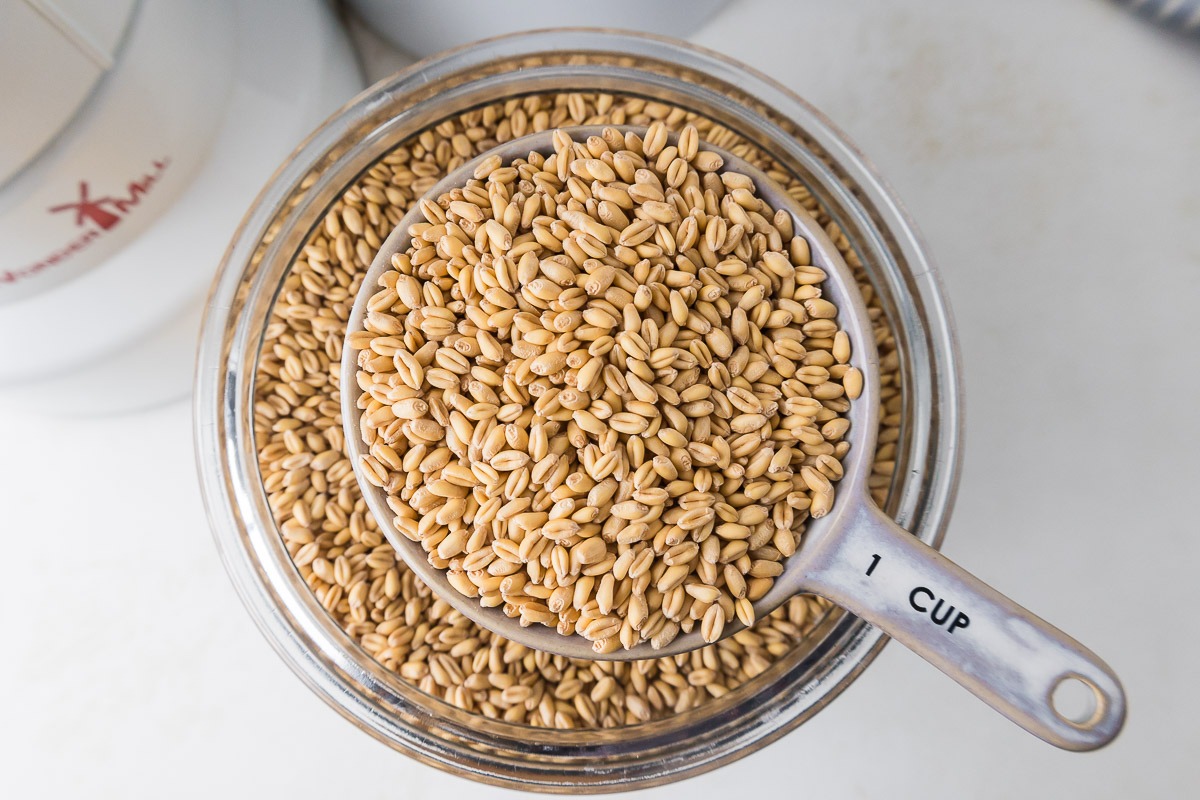
First, a quick refresher: the three parts of a berry
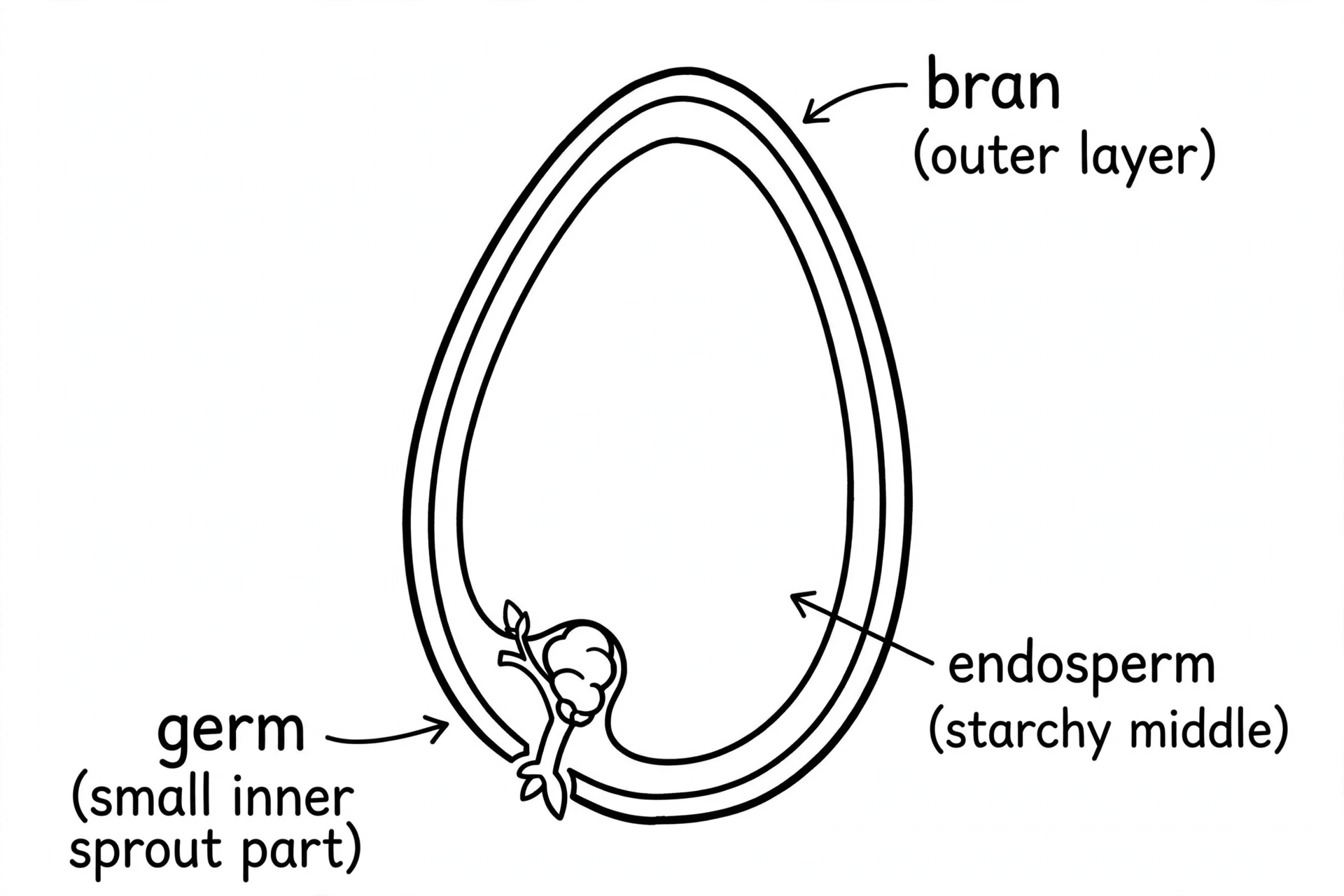
Every wheat berry has three parts, and everything in this post comes back to them:
- The bran — the outer coat. Fiber, B vitamins, minerals.
- The germ — the living heart that would sprout. Vitamin E, healthy oils, more B vitamins, antioxidants.
- The endosperm — the starchy middle. Mostly energy, with some protein — and it’s the only part that becomes white flour.
Freshly milled flour keeps all three, together, ground minutes before they go into your bowl.
Store-bought flour — even good flour — has made compromises with each of them. Here’s how.
White flour: the endosperm, alone
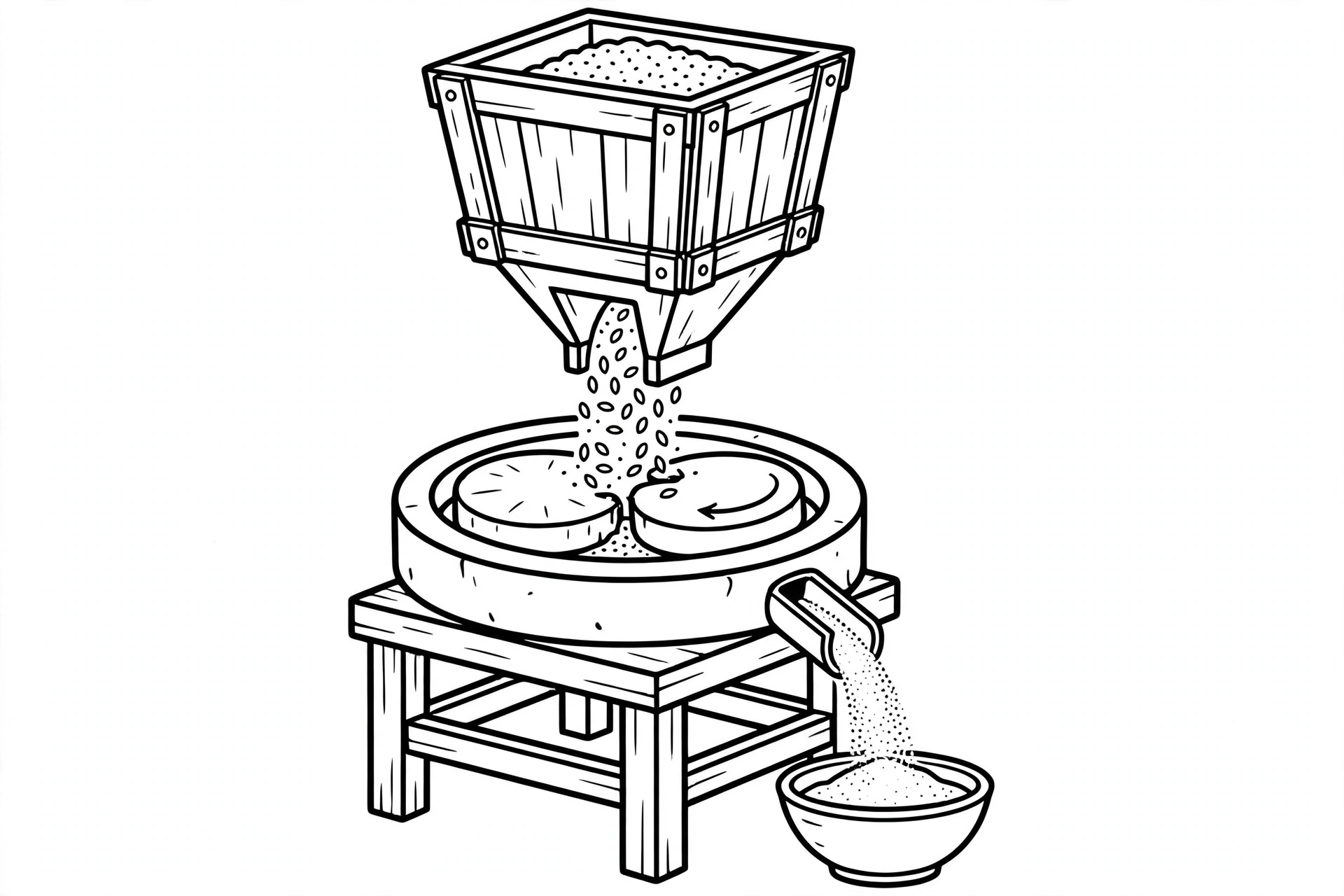
Regular white flour is milled in a very different way than my little mill at home. Commercial mills split each berry into its three parts — bran, germ, and endosperm — and keep only the endosperm for white flour. The bran and germ are taken out — mostly because the germ’s natural oils go rancid over time, and a flour meant to sit in warehouses and on shelves for months can’t carry them.
Removing the bran and germ removes most of what the berry had to offer:
- Most of the fiber — white flour keeps only a small fraction of the whole berry’s fiber.
- The vitamin E and healthy oils — those lived in the germ, and the germ is gone.
- Much of the magnesium, zinc, and other minerals — concentrated in the bran and germ.
- A good share of the B vitamins — again, bran and germ.
You have probably seen the word “enriched” on a bag of white flour. That means the mill added a few nutrients back after milling — iron and several B vitamins, including folic acid, are put back by law in the US. That’s better than nothing, and it was done for real public-health reasons. But enrichment puts back a short list. It does not put back the fiber, the vitamin E, the oils, or the full range of minerals the whole berry started with. It’s a partial refund, not the whole paycheck.
Store-bought whole wheat flour: all three parts, but time has passed
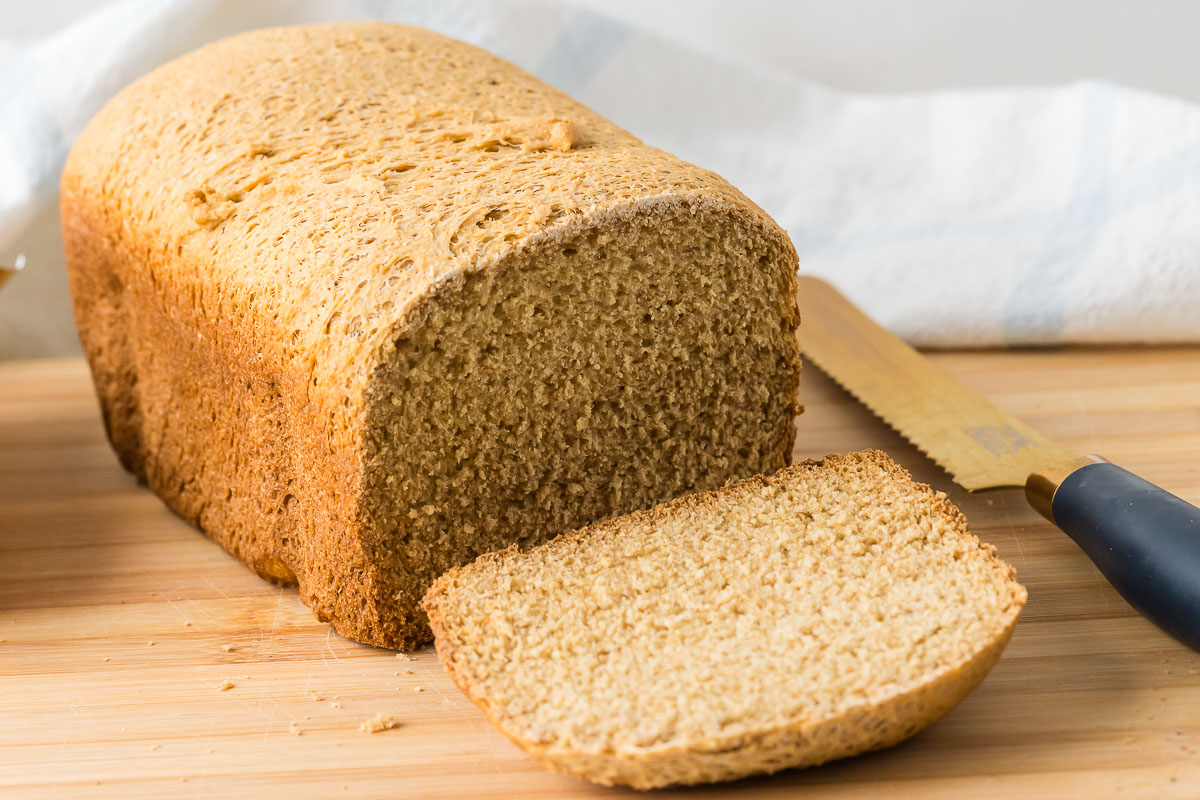
Now, the fairer comparison. Store-bought whole wheat flour keeps the bran, germ, and endosperm — on paper, it has the same ingredients as my fresh flour.
The difference is the clock, and I talked about this in Post 1: the moment a berry is ground, the germ’s oils meet the air and begin to oxidize. Flavor flattens and turns a little bitter. Delicate nutrients — vitamin E first among them — quietly fade, and they keep fading the whole time that flour sits. By the time a bag has traveled from the mill to a warehouse to a store shelf to your pantry, a significant share of the nutrition the berry started with is simply gone.
A bag of whole wheat flour was milled weeks or months before you open it. It may then sit in your pantry for months more. It’s honest food, and I baked with it for years — but it is the whole berry after time took its share. That slightly bitter, dusty taste many people think “whole wheat just tastes like” is often just… old flour. Freshly milled whole wheat, especially from hard white wheat, tastes mild and a little sweet. That was the surprise that converted me.
What about flavor and baking?
Nutrition aside, here’s what changed in my kitchen:
- Flavor: fresh flour tastes warm, nutty, and alive. Breads need less sugar and less “help” to taste good.
- Fullness: the fiber and the whole package mean a slice of fresh-milled bread keeps my family full in a way white bread never did.
- Freshness you control: wheat berries store beautifully for a very long time, whole and patient. I mill what a recipe needs, when it needs it — so the “flour” in my pantry is really berries, aging gracefully instead of fading.
- A small learning curve, honestly: fresh flour drinks up more liquid and behaves a touch differently in dough. That’s real, and it’s learnable — it’s exactly what my mini-course walks through, and what Post 3 of this series starts on.
So is store-bought flour “bad”?
Yes — I’ll say it plainly. I believe modern store flour is a poor food, and I think it’s part of why so many people are struggling with their health today.
White flour has been stripped of nearly everything that made the wheat berry nourishing — the fiber, the vitamin E, the healthy oils, most of the minerals. What’s left is mostly starch, which your body handles a lot like sugar. And enrichment doesn’t fix it: a few nutrients sprinkled back in does not make it the same food.
And here is the part many people miss: even the whole wheat flour in a bag has lost a significant share of its nutritional value by the time you bake with it. It was milled weeks or months ago, and all that time sitting in warehouses and on shelves, the germ’s oils oxidize and the delicate vitamins fade. The bag says “whole wheat” — but time has already taken much of what made it whole.
Our grandmothers’ bread nourished people. The berry didn’t change. What we do to it — and how long we wait after doing it — did.
That’s why I mill at home. It’s not about being perfect or precious about food; it’s about giving my family bread that still carries what the berry grew with. Start with one recipe. Taste the difference — and notice how you feel after eating it. That’s what I did, and I’ve been milling ever since.
Baking with freshly milled flour?
If this comparison has you curious to try milling your own, I put everything I wish someone had handed me at the beginning into my Freshly Milled Flour Basics mini-course — which wheat berries to buy, how milling and hydration actually work, and your first breads, bagels, and waffles, step by step.
👉 Learn more about the mini-course here: https://tastyhomemaderecipes.com/freshly-milled-flour-basics-mini-course/
No pressure at all — start with one recipe on the blog and see how it tastes in your kitchen. That’s how I started, too.
Frequently asked questions
Is freshly milled flour more nutritious than store-bought whole wheat flour?
Yes. They start from the same whole berry, but bagged whole wheat flour may be weeks or months old by the time you bake with it — and all that time sitting on the shelf, the germ’s oils oxidize and a significant share of its nutritional value is lost. Fresh flour is used right after milling, while everything the berry grew with is still there. Against white flour, the difference is bigger still — the bran and germ were removed entirely, so the flour was stripped of most of its nutrition, and enrichment only adds a few nutrients back.
Why does store whole wheat flour sometimes taste bitter?
Usually age. Once the germ is ground, its oils oxidize and can turn bitter or rancid-tasting. Freshly milled flour from the same kind of berry tastes noticeably milder and sweeter.
Does enriched flour make white flour equal to whole grain?
No. Enrichment replaces iron and a few B vitamins, but not the fiber, vitamin E, healthy oils, or the full mineral content of the whole berry.
How long does freshly milled flour keep?
Best used the day you mill it. If you have extra, seal it and keep it in the fridge or freezer and use it soon — treat it like a fresh food, because it is one. Whole berries, by contrast, keep for a very long time stored cool and dry. Storing flour properly is something I go into in detail in my Freshly Milled Flour Basics mini-course — exactly how long fresh flour keeps, fridge versus freezer, and how I store my berries so they stay good for the long haul.
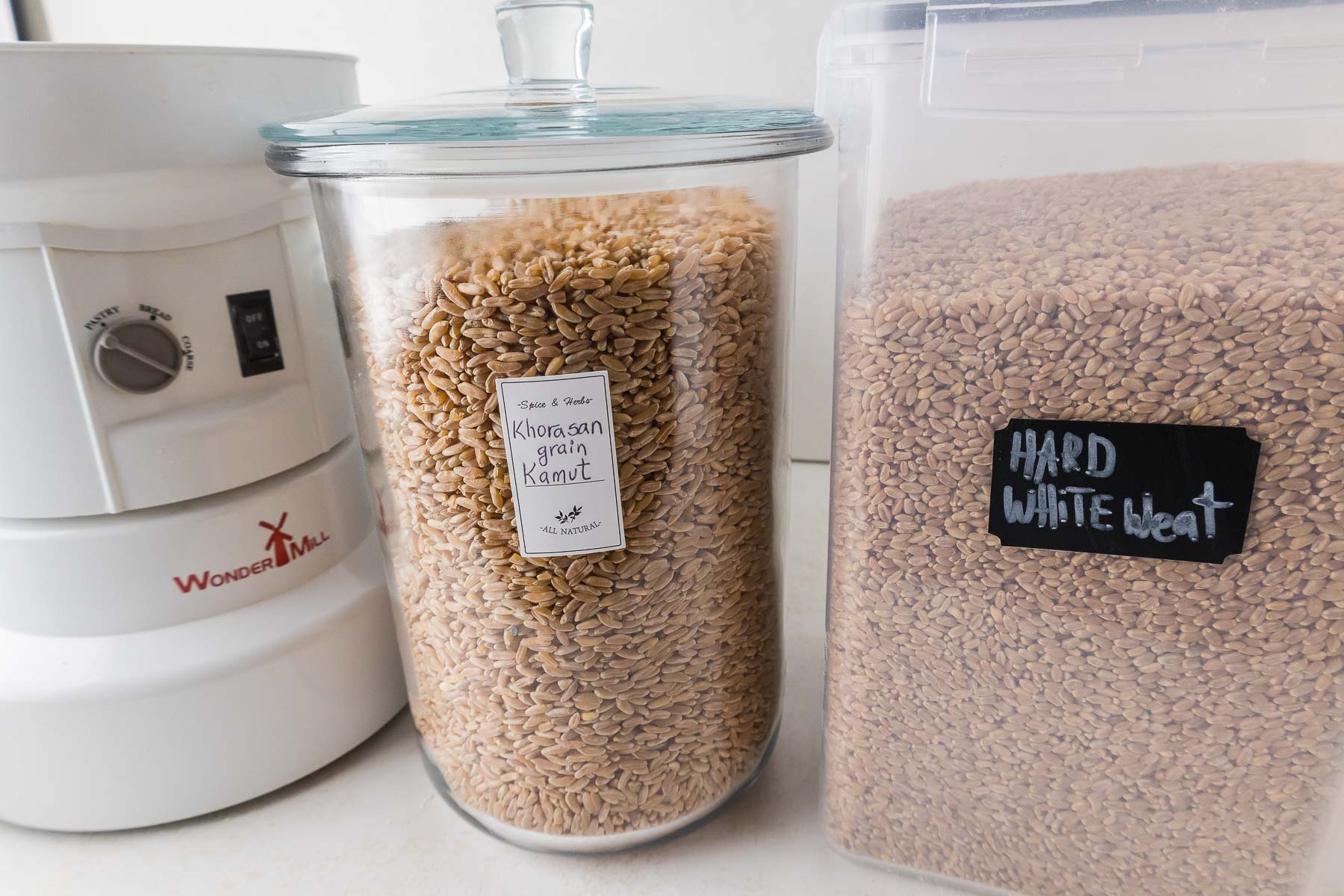
Do I need a special mill to start?
You need some way to grind the berries — a dedicated grain mill is the usual route, and Post 3 in this series walks through choosing one as a beginner.
Want to learn more about grains and milling?
If you’d love to go deeper — choosing the right mill, learning the grains, which grain to use for which baking, where to buy good wheat berries, and how freshly milled flour behaves differently from store-bought flour in your dough — just comment GRAINS below, and I’ll send you a message with everything about my Freshly Milled Flour Basics mini-course, where I take you through it all, step by step. 🌾
Next in the series: Post 3 — “Searching the Divine Teachers: Are Grains Really Good for Us?”
Leave a Reply