
If you’ve spent any time on my blog, you’ve seen me say “freshly milled flour” in recipe after recipe – my breads, my waffles, my bagels. And if you’re new here, you might be wondering… what is that, exactly? Is it a special flour you buy somewhere? A brand?
It’s simpler than you think.
The short answer
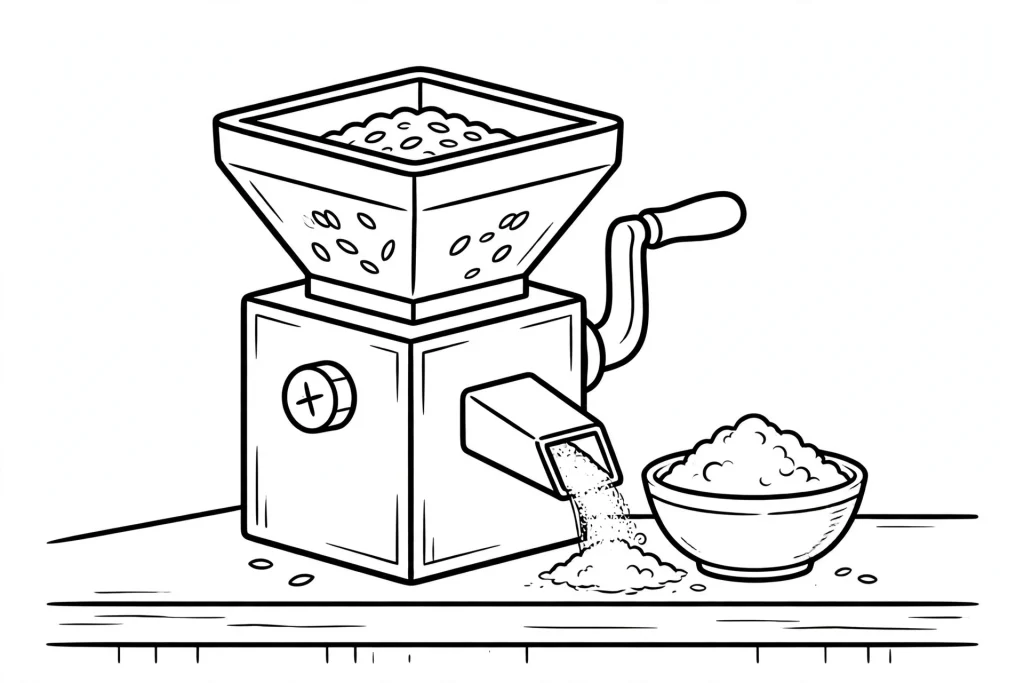
Freshly milled flour is flour you grind yourself, at home, from whole grain berries – usually wheat berries – right before you bake with it.
That’s it. You take the whole berry, just as it was harvested, put it through a grain mill, and in seconds you have warm, soft, fragrant flour. Nothing removed. Nothing bleached. Nothing added back in later.
It’s not a product off a shelf. It’s a when as much as a what – flour at its freshest, before time has a chance to take anything away from it.
What’s inside a wheat berry?
To understand freshly milled flour, it helps to meet the wheat berry first. A wheat berry is the whole, unprocessed seed of the wheat plant. If you planted it, it would grow.

Every berry has three parts:
The bran – the outer layer. This is where much of the fiber lives, along with B vitamins and minerals. It gives whole grain flour its color and a lot of its hearty flavor.
The germ – the living heart of the berry. This is the part that would sprout into a new wheat plant, so it’s packed with goodness: vitamin E, healthy oils, B vitamins, and antioxidants.
The endosperm – the large, starchy middle. This is the berry’s food supply for that sprouting germ, and it’s the part that becomes plain white flour.
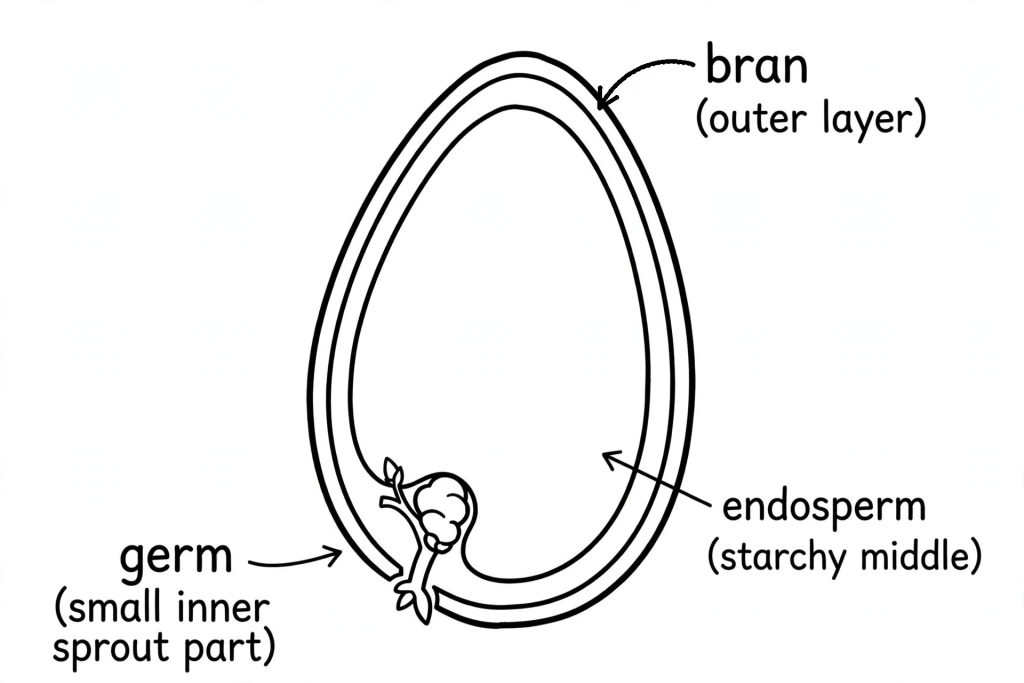
When you mill the whole berry at home, all three parts end up in your flour – together, the way they started. That complete package is the whole point.
So why does “freshly” matter so much?
Here’s the thing I didn’t know when I started: the moment you grind a wheat berry, a clock starts ticking.
The germ contains natural oils. Once the berry is cracked open, those oils are exposed to air and begin to oxidize. Nutrients – especially vitamin E and those delicate B vitamins – start breaking down, too. Fresh flour is alive with flavor for the same reason fresh-ground coffee smells so much better than the can that’s been open for months.
Wheat berries, on the other hand, are patient. Kept whole, dry, and cool, they store beautifully for a very long time – nature packaged them to last. Milling only what you need, when you need it, means the flour in your bowl still has what the berry started with: the flavor, the aroma, and the nutrition.
When I first heard about this – on a Sue Becker podcast, in the middle of my own research into how our families are meant to eat – it stopped me in my tracks. Bread has been a staple in every tradition I looked at. But the bread I grew up on, and the flour in my pantry, wasn’t really the same food anymore.
I got a second-hand mill, ordered my first grain, and started learning, one recipe at a time.
What does freshly milled flour taste like?
Warm. Nutty. A little bit sweet, even.
Every grain is a little different, and that’s part of the fun:
- Hard white wheat – mild and gentle, my go-to for everyday breads and sandwich loaves.
- Hard red wheat – deeper, heartier, that classic whole wheat flavor.
- Soft white wheat – tender, lovely for pastries, muffins, and cakes.
- Ancient grains like einkorn and spelt – rich and golden, with flavors all their own.
Fresh flour also behaves a little differently in dough – it tends to be thirstier and keeps absorbing liquid as it rests – and that part takes a little practice. For now, just know: the difference isn’t only nutrition. You can taste it in the first slice.
What can you make with it?
Almost anything you make with regular flour:
- Sandwich bread, dinner rolls, and crusty loaves
- Bagels and pizza dough
- Waffles, pancakes, and banana bread
- Cookies, muffins, and cakes
Start with my Waffles with Freshly Milled Flour:
In my kitchen it’s the weekend cinnamon rolls, the Sunday waffles, and the bagels we enjoy making. My kids were store-bought bread kids at first – now they ask for the homemade loaves. I consider that my best review.
A few honest beginner notes
You don’t mill a big batch and store it like store flour. Mill what your recipe needs. If you do have extra, seal it up and keep it in the fridge or freezer, and use it soon.
Your first loaf doesn’t have to be perfect. Mine wasn’t. Fresh flour is forgiving, and every bake teaches you something.
You do need a way to mill. That can be a grain mill — electric or hand-cranked. It helps to look into the mills a little first, or check your local Facebook Marketplace for a second-hand one. You don’t need the fanciest one to start. I didn’t start with one.
Baking with freshly milled flour?
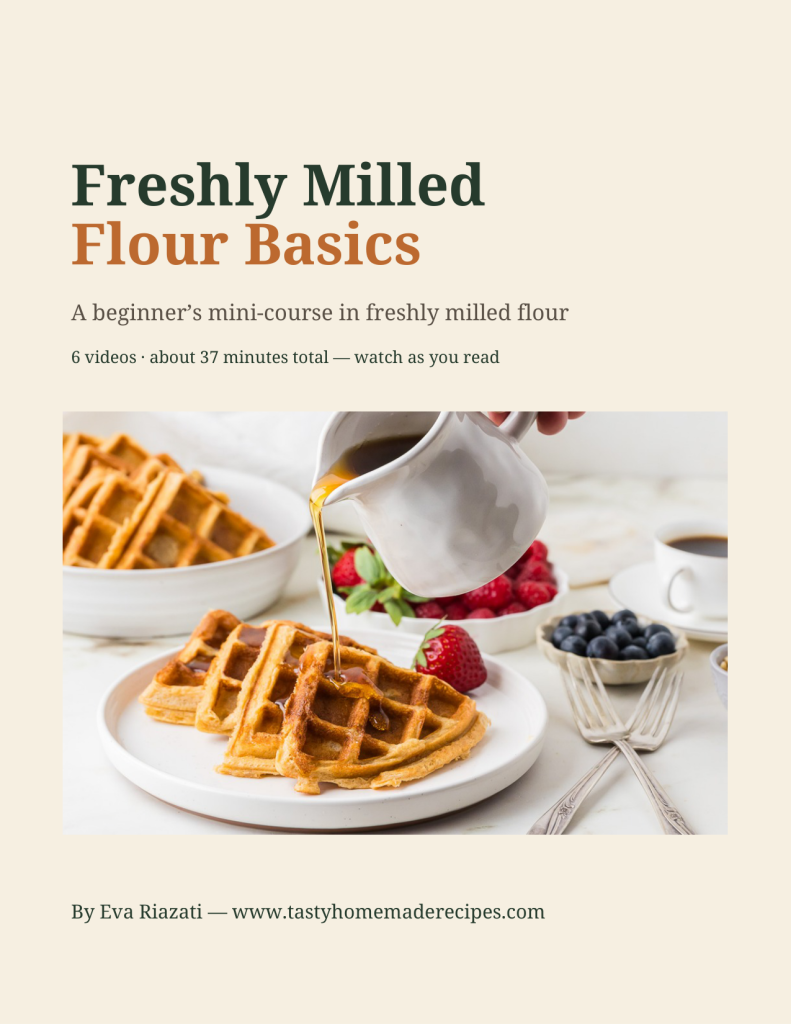
If this has you curious to try it yourself, my Freshly Milled Flour Basics mini-course is the basics, all in one place — made for people who are just starting out. It covers which wheat berries to buy, how milling and hydration actually work, and your first waffles, step by step.
Learn more about the mini-course here.
Start with one recipe on the blog and see how it tastes. That’s how I started, too.
Frequently asked questions
Is freshly milled flour the same as whole wheat flour from the store?
Not quite. Store whole wheat flour is milled from the whole berry, but it was milled weeks or months before it reached you, and that time costs flavor and nutrients. Freshly milled means you grind it right before baking. We’ll compare them side by side in this post series.
Do I have to mill it the same day I bake?
Ideally, yes – that’s when it’s at its best. Same-day is the goal, not a hard rule. Mill in the morning, bake when you’re ready.
Where do you buy wheat berries?
I order mine online – Grand Teton Ancient Grains is my regular source for hard white wheat berries – and many people find berries through Azure Standard, co-ops, or Amazon. Start with a small bag of hard white wheat if you bake bread. (As an Amazon Associate I earn from qualifying purchases.)
Does freshly milled flour work in bread machines and mixers?
Yes. I use both in my kitchen. The flour doesn’t care how the dough gets kneaded – it just wants to be fresh. My bread machine is the Zojirushi Virtuoso Plus, and my mixer is the NutriMill Artiste — both handle fresh flour dough well in my kitchen.
So welcome to this new journey — the joys of freshly milled flour. Be patient, and take it one recipe at a time. Give yourself and your family time to adapt, because your taste buds will change too. Take it slowly. And if there is a recipe you wish I would post, please comment — I will try to make it and write a detailed post about it.
Leave a Reply